Education

Education at BCS - A Structured Learning Pathway

BCS medical cupping training for healthcare professionals, from clinical workshops to advanced Level 7 study, with a focus on patient safety, evidence and competence.

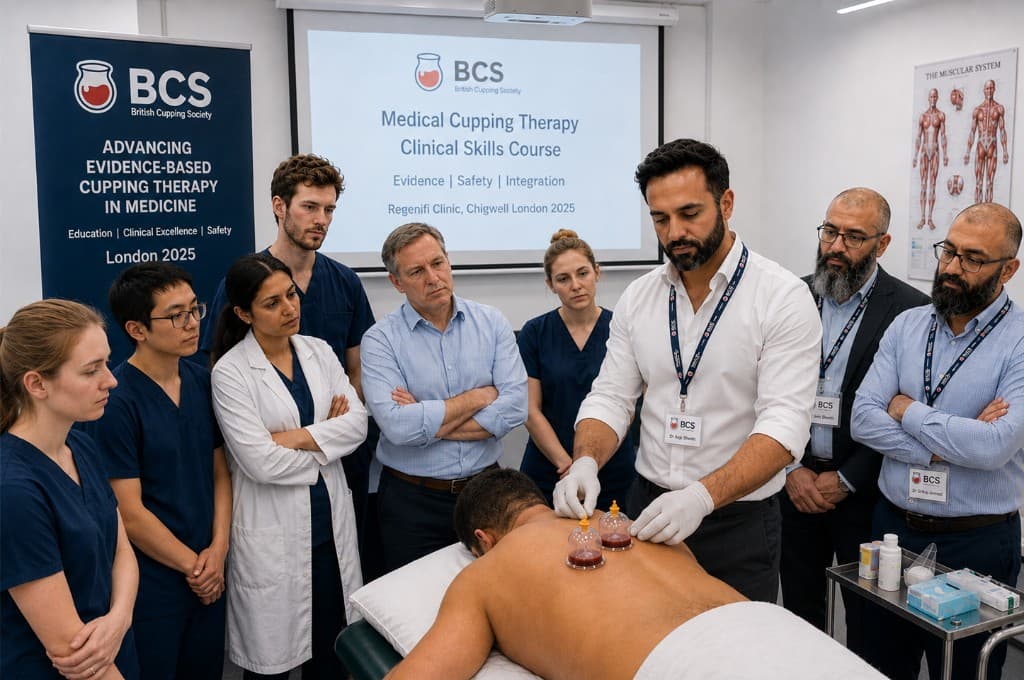
BCS tutor demonstrating cupping technique to healthcare professionals at a Medical Cupping Therapy clinical skills course in London, 2025
Pathway

A progressive route into medical cupping education

BCS education is designed as a progressive pathway rather than a collection of unrelated courses. Learners can enter at a level appropriate to their professional background and objectives, then develop from awareness and foundational knowledge to practical competence, advanced study and leadership.

Designed for clinicians

BCS education respects professional scope. Training develops competence within your existing registration - it does not create a new licence or expand statutory practice rights.

  1. 01

    Foundation awareness

    Educational exposure for medical students and early learners who need critical understanding without independent practitioner status.

  2. 02

    Clinical competence

    Structured workshops for registered healthcare professionals combining theory, practical skills, assessment and safety.

  3. 03

    Advanced study

    Higher-level pathways focused on clinical reasoning, evidence appraisal, governance, teaching and service development.

Standards

How BCS education is organised

Eligibility, professional accountability and competence sit at the centre of every BCS learning pathway.

Entry requirements and professional eligibility

BCS education is principally designed for medical and healthcare professionals because medical cupping therapy requires clinical judgement, risk recognition and professional accountability.

Eligible backgrounds may include doctors, surgeons, dentists, nurses, physiotherapists, pharmacists, physician associates or assistants, occupational therapists, podiatrists, and other healthcare professions that meet BCS criteria. Eligibility is determined by qualification, registration, lawful scope, clinical experience and the specific course.

Eligibility for a BCS course does not mean that every participant may lawfully perform every technique in every country. Learners remain responsible for practising within local law, professional regulation, employer policy and indemnity arrangements.

Why healthcare professionals only?

BCS emphasises healthcare-professional training because patient-facing procedures require more than technical instruction. The practitioner must recognise when symptoms may indicate serious disease, understand medication and comorbidity, communicate risk, manage infection-control requirements and know when referral is necessary.

This position is particularly important for wet cupping. Skin penetration and blood exposure create responsibilities that should be managed within a robust clinical framework.

Assessment, certification and CPD

Professional education should distinguish participation from competence. A certificate of attendance confirms presence; a competency-based credential should require evidence that defined standards have been met.

Continuing professional development is central to safe practice. BCS CPD can include clinical updates, journal clubs, webinars, case conferences, practical refresher sessions, adverse-event learning, research methods, ethics, safeguarding and infection prevention.

Next step

Ready to discuss BCS education?

Tell us about your professional background and learning aims. We can point you toward membership, workshops and the wider BCS education pathway as programmes open.